

Whether or not you are doing standard systemic therapy, – chemo, radiation, – you may improve your chances of survival and recovery by taking a multi-pronged approach, and combining one or more gentle integrative therapies with the 5 Rs. Other therapies you may like to explore and consider, once you have made the simple basic positive lifestyle changes discussed in The Five Rs, are listed below.
Some notable left of field approaches to cancer treatment
- Gerson Therapy
- Intravenous or Liposomal Vitamin C therapy
- Anti-angiogenic therapy
- Artemisia
- Immunotherapy
- Photodynamic-/Photo-therapy
- Low Dose Naltrexone
- Melatonin
- Bisphosphonates (for bone cancer)
- Coley’s toxins
- Salvestrols
- Pain management
Alcohol Therapy
A novel therapy currently being explored at Harvard University for inoperable cancers, such as liver cancer. Alcohol therapy relies on the sheer toxicity of alcohol to wipe out cancer cells by direct injection of pure alcohol into tumours. It appears to work, but is obviously still experimental. We include it here because theoretically there is no systemic toxicity since the alcohol is directly targeted at the tumour.

Anti Angiogenic Therapy
Pioneered by Professor Judah Folkman of Harvard Medical School, after 25 years of research, Anti-Angiogenic Therapy is based on starving tumors to death by choking off their blood supply. After an initial ‘silver bullet’ reaction to anti-angiogenic drugs, there were disappointing results. But this therapy is now back with more realistic expectations. No longer seen as a lone ‘cure’, it is now proving useful when used in combination with chemotherapy. There are currently many ongoing research studies worldwide into this promising area of cancer treatment.
However, the source of a number of anti-angiogenic drugs, cartilage, both bovine and shark cartilage, is freely available. Immunopower, contains bovine cartilage, and “Benefin”, a shark cartilage powder, is readily available. For suppliers see Resources page.
Updates on some anti-angiogenic trials.
Scot Remick, MD, presented an update to a Phase II clinical trial evaluating Ca4P (combretastatin) as a treatment for advanced anaplastic thyroid cancer. Ireland researchers found that 29% of patients experienced stability of their aggressive cancer with this anti-angiogenesis inhibitor.
“Without a doubt, we have observed patient benefit from Combretastain therapy in anaplastic thyroid cancer, which is one of the most aggressive types of cancer,” says Dr. Remick, Associate Director for Clinical Research at Ireland and Professor of Medicine at Case. “In some cases, patient response has been extraordinary, and supportive of the complete response observed in one patient who is still cancer free today — more than six years after participating in our initial Phase I clinical trial. We believe that the data presented today provides further evidence of the biological activity of this compound and that additional clinical trials are warranted to investigate the potential clinical benefit of combining Combretastatin with other therapies, including chemotherapy.”
Janice Lyons, MD, on behalf of the breast cancer team of the Ireland Cancer Center, presented findings that the use of traditional chemotherapy, docetaxel, with bevacizumab (Avastin) is well tolerated in patients with locally advanced breast cancer. This Phase II study analyzed docetaxel alone compared with its use in combination with bevacizumab and found no significant differences in side effects between the two groups.
Panos Savvides, MD, on behalf of the head and neck cancer team of the Ireland Cancer Center, presented findings from a Phase I study of the use of Tarceva in combination with docetaxel in successfully treating advanced head and neck cancers. This promising research will be followed up by a Phase II study into the efficacy of Tarceva, an EGFR tyrosine kinase inhibitor.
Anti-Neoplastons Therapy
Billed by their discoverer Dr Stanislaw Burzynski, as the body’s own treatment for cancer, Anti-neoplastons are peptides normally found in abundance in the blood and urine of normal healthy people, but deficient in cancer patients. In studies and trials over 40 years, Dr Burzynski has established that Anti-neoplastons can halt the spread of tumours and turn cancerous cells back to normal. Treatment is by a mixture of intravenous infusions and pills, and should be considered adjuvant rather than total therapy. There is evidence that Anti-neoplastons are of particular efficacy in brain tumours. Side effects are minimal.
Artemisia
ARTEMISIA -THE PLANT FROM WHICH THE ANTIMALARIAL ARTEMISININ DERIVES.
Is said to be more potent against malaria than artemisinin alone, without the drug’s side effects, and new evidence suggests it has potential to treat cancer also.
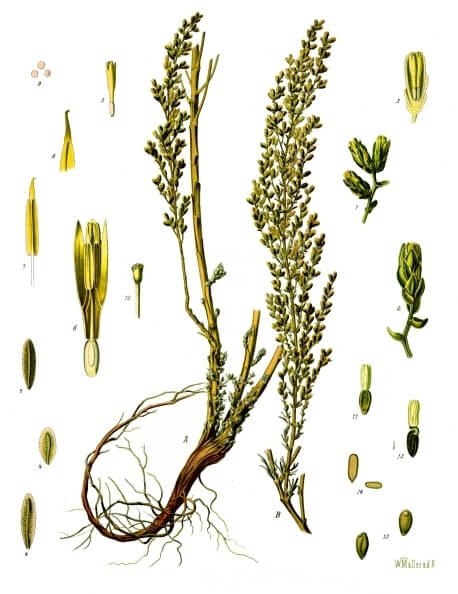
Artemisinin is very much an experimental cancer therapy at present. The adverse effects of the drug Artemisinin have to be weighed in considering this option.
If you want to try it “on compassionate grounds”, this protocol below may be helpful.
However, Survive Cancer has no direct knowledge of the outcomes from this protocol, and (as with all therapies about which we bring you information), cannot be held liable for any adverse effects or poor outcomes.
That said, as we have seen from the publications below, the early research is encouraging for the future development of artemisia and artemisinin as cancer therapy:
Aromatherapy
Aromatherapy can be defined as the therapeutic use of essential oils from plants used to affect mood and promote health. This ancient therapy holds a popular place in nature-based therapies and is inexpensive compared to many other treatments.

An essential oil is the volatile oil of certain aromatic plants. The oil is produced by steam, steam and water, or water distillation. The vapours are condensed to yield a water condensate and an essential oil that can be separated off (usually by gravity). Selected essential oils can be blended and given via lotions, inhalants or a variety of other methods.
Aromatherapy can give a helping hand to people undergoing certain cytotoxic chemotherapy treatments in assisting to help to prevent infections arising from reduced resistance, nausea and vomiting, help to prevent burning, itching and give extra protection to skin arising from radiotherapy treatments and has even been shown to promote the production of white blood cells – particularly useful when one needs a high leukocyte count before chemotherapy can be administered.
Immunological and Psychological Benefits of Aromatherapy …
7 Essential Oils for an Immunity Boost | Origin Nutraceutical
Tea tree oil, for example, can be invaluable for cancer patients dealing with oral thrush from chemotherapy:
Aromatherapy can also offer vital psychological support by offering tactile care and promoting a return to that place inside ourselves where healing can be possible.
There are some contra-indications to take into account, as essential oils are complexes of many compounds, sometimes toxic or allergy inducing in some. So advice should always be sought from a qualified aromatherapist.
Kendra Kirkham, Aromatherapist Oxford, UK
Email: kendra@aromatherapist.plus.com
Essential oils such as tea tree oil can have strong topical anti-inflammatory and even anti-cancer actions -topically, in melanoma, for example. Cf.
The Wizard of Oz, or the intriguing tale of the tea tree.
Biological activity of Melaleuca alternifola (Tea Tree) oil …
Many essential oils sold are adulterated. To ensure really pure and high quality oils visit Kobashi Oils, certified by a perfume chemist as high grade and clean:
USA LINK:
UK LINK:
Car T-Cell Immunotherapy
CAR T-cell therapy is a revolutionary new approach in treating cancer. It is good for leukemias/lymphomas although not with 100% success rate for all patients. It can be done privately in London and elsewhere, if one can afford it. And one needs time, as the cells must be cultured/treated which takes a month.
Six years after CAR T-cell therapy for lymphoma, patient still cancer-free.
The CAR T-cell therapy success rate is about 30% to 40% for lasting remission, with no additional treatment, according to Michael Bishop, MD, director of UChicago Medicine’s cellular therapy program.
War in the Blood, a film about treating cancer patients with CAR T-cell therapy
How much is a human life worth? An innovative cancer therapy promises to save lives. But it is extremely expensive. Will the …
Cryosurgery
(For Liver and Prostate Cancer, and liver metastases/secondaries)
Cryosurgery is a minimally invasive form of surgery, which uses very fine probes to inject liquid nitrogen directly into a tumour site. The tumour then freezes to death, there is no damage to surrounding tissues and the dead tissue is eventually reabsorbed by the body and replaced with healthy tissue. Due to the precision and cleanness of this approach there is also virtually no risk of major haemorrhage. This technique is particularly suitable for the treatment of inoperable or difficult to access tumours of the liver or prostate, which also defy radiation. It has the advantage that multiple tumours in these organs can be treated at one time, and offers a good prospect of cure. (Indeed trials to date do appear to have achieved some individual cures: survival beyond 5 years). Cryosurgery is guided by ultrasound, though MRI imaging is currently being investigated. The pioneer of Cryosurgery is Gary M Onik of the Florida Hospital Celebration Health for Surgical Advancement in Florida. (See Doctors)
Coley’s Toxins
Also known as MBV, Mixed Bacterial Vaccines, usually done as a one-off injection, which can stimulate the immune system and alert it to the presence of tumours which normally evade it. Coley’s Toxins historically – in the late 19th century and early 20th century – had a 50% cure rate for soft tissue sarcomas and lymphomas, but were forgotten when radiation therapy became fashionable. Medical interest in this therapy is now reviving, particularly in Japan and China, which has a special Coley’s Hospital. Side effects can include very high fevers, chills and shaking, all signs of the immune system gearing up. A high temperature is by itself toxic to tumours, which do not survive heat well.
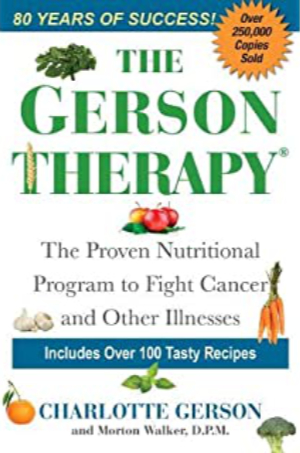
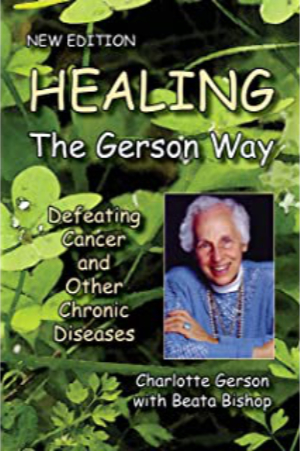
Gerson Therapy
Max Gerson was a German doctor who in the early twentieth century devised an anti-cancer diet and regime based on radically altering the sodium/potassium ratio in the body for the better, thus allowing optimal cellular functions, and nutrition, coupled with intensive detoxification through the use of coffee enemas.
Coffee enemas (see Detox, in First Steps, 5 Rs of Cancer Survival,) are a scientifically established, and medically accepted, way of stimulating the production of glutathione-s-transferases, a major liver detoxifying enzyme family. The diet is vegetarian, low in protein, with fresh organic fruit and vegetable juices daily, and certain specified supplements, such as potassium, niacin and vitamin C. At the end of his life Gerson testified before Congress with the details of 50 cases he had cured. His daughter, Charlotte, has continued Gerson’s work in the U.S. However, she has not made an attempt to integrate modern nutritional state-of-the-art knowledge into the therapy. This is being done by Gar Hildebrand. A retrospective study showed that the Gerson therapy is much more effective than chemotherapy for ovarian cancer and melanoma, both particularly aggressive forms of cancer. Gerson himself had notable successes with various kinds of brain tumour, even after some neurological damage had occurred. Orthomolecular Oncology suggests combining Immunopower with Gerson as an update. We can also cite a remarkable case of a 11 year remission in Multiple Myeloma, another fast-moving, relentless cancer without conventional cure, otherwise conventionally untreated, achieved through a combination of Gerson and modern orthomolecular approaches. Gerson is a powerful, comprehensive therapy, still capable of producing cures, even in its unmodulated form. However, it requires great discipline, time, and extra assistance. Read Gerson’s book and/or contact the Gerson Institute for further details.
Recommended Videos & Documentaries
Recommended Books

Heat Therapy
Heat therapy, or hyperthermia, is based on the fact that cancer cells do not survive high temperatures well. At the critical high temperature a cancer cell will die long before any damage is done to the body’s normal cells. Heat therapy can be done either on a local basis, with the direct application of heat to superficial tumours, or, systemically, by raising a cancer patient’s temperature up to 42oC for several hours at a time. Heat therapy is often combined with chemotherapy, as they appear to be mutually enhancing. Heat therapy is nonetheless efficacious alone, if done properly. A mild form of readily accessible heat therapy is the regular use of saunas, (for those cancer patients free of cardio-vascular and brain complications, with good kidney/liver function).
Dr Emmanuel Varipartis uses heat therapy at the Omnicare Medical Centre, 2 Brady Street, Sydney, Australia. Tel: +61 2 9960 4133, Fax: 0061 2 9968 2417.
Heat therapy is also available in Europe, and in the UK from Dr Shideh Pouria, The Burghwood Clinic, 34 Brighton Road, Banstead, SM7 1BS.
Tel: 01737 361177
Email: info@burghwood.co.uk
Web: www.burghwoodclinic.co.uk
Hoxsey’s Herbs
An old formula with a range of established immunomodulating and anti-carcinogenic plant extracts. This therapy should be treated solely as adjuvant A similar but more potent formula derived from Chinese Herbs known as ACBA or “anti-cancer botanical agents” has recently been reformulated under the direction of Dr Keith Block MD (see Doctors).
Immuno Placental Therapy / VG-1000 (Govallo’s Vaccine)
Dr Valentine Govallo is a Russian immunologist and doctor who saw in the analogy between the way a fetus evades the mother’s immune system and the way cancer evades the immune system, a possible solution to cancer. He then developed a vaccine from the human placenta after a live birth which appears to wake up the immune system of cancer patients to this evasion. Records of Govallo’s first trial with 45 patients and IPT in 1974 show 29 (64.4%) still alive after more than 20 years. Side effects are typical of many vaccinations: fever, malaise, flu-like symptoms for 1 to 2 days. Due to the strong possibility of “tumour lysis syndrome” because of the newly mounted immune attack, it is critical that detoxification and full nutritional strategies, including the use of coffee enemas, be in place before a course of IPT.
Immunotherapy
William Coley, of Coley’s Toxins fame, was probably the first successful immunotherapist of the modern age. The assumption made by Coley, that if the immune system is alerted to the presence of cancer, – which usually goes undetected by mimicking pregnancy and by other means, – it is capable of attacking and killing tumour cells, lies behind many current immunotherapeutic approaches. Dr Steve Rosenberg of NCI has gained fame, – and both “lost” and cured patients, – by synthetic manipulation of just one or two “cytokines”, the body’s immune hormones. This approach is essentially crude and unbalanced, because it does not draw on the full complement of the immune system’s powers. The use of another immune hormone, interferon, as sole or adjunctive therapy, has also had varying success, probably for similar reasons, though interferon has proved less toxic than Dr Rosenberg’s use of various “interleukins”. This type of immunotherapy, which in the past has also included use of BCG vaccines, is known as Non-specific Immunotherapy.
A more promising approach in this field, with some early successes, notably Myeloma and some Lymphomas, and no apparent downside, is Active Immunotherapy, or the use of vaccines of various kinds, some tailor made to individual patients and their tumours, usually based on extracted tumour tissue. The National Cancer Institute alone numbers over 100 vaccine trials. Adoptive Immunotherapy uses lymphocytes from cancer patients which are taught to recognize tumour antigen – bits of protein on the cell surface, distinguishing characteristics of tumour cells. Sometimes a whole individual tumour cell is fused to a “dendritic cell”, the white blood cell that summons T-cells to the kill, after identifying enemy invaders.
Another aspect of immunotherapy on which much work and clinical trials has been done is Passive Immunization or Antibody based therapies. Immunized monoclonal antibodies can be used to deliver a whole range of tumour cytotoxic agents in a completely targeted manner, like guided missiles. These agents include radioactive isotopes; or toxins which would kill the organism if not specifically targeted, (such as ricin); chemotherapy drugs; enzymes; genetic drugs such as antisense DNA molecules intended to block viral protein production in cancer cells; inflamatory molecules such as Tumour Necrosis Factor, and immune cells themselves, e.g. genetically engineered T cells, etc. This is an exciting area where much work is being done and more scientific development can be expected. A thorough search on the Internet, beginning with the NCI’s PDQ database (link), should reveal information on current clinical trials.
Today there are a variety of treatments and strategies that use the immune system to tackle cancer. Some, such as the antibody-based breast cancer drug Herceptin, are now used routinely to treat cancer patients.
See also: CAR T THERAPY, which uses a patient’s own immune cells:
Indocin
Indocin is a non-steroid drug, like aspirin, with similar side-effects (i.e. stomach bleeding and ulcer perforation can be a problem in sensitive individuals). Indocin interferes with prostaglandin 2 production. The latter is an “eicosanoid”. Eicosanoids promote the inflammatory responses in the body which in turn favours tumour growth. Thus inhibiting prostaglandin E2 inhibits tumour growth, so that the immune system can better cope with the tumour. However, remember that high doses of Omega-3 fatty acids are also anti-inflammatory and animal studies have also shown reduced tumour growth with Omega-3s, an orthomolecular substance, which Indocin is not. (A rare contra-indication to Omega-3s is blood clotting difficulty problems, e.g. thrombocytopaenia).
Kelley’s Metabolic Typing Therapy

Kelley was an American dentist who noted a division in cancer patients (and in the general population) between those with a sympathetic nervous system dominance and those with a parasympathetic nervous system dominance, with gradations of dominance in each category. According to Kelley, this distinction translates into very different biochemical profiles, and differing organ strengths and weaknesses, with a resulting tendency to particular cancers in each category.
Thus Kelley’s approach to cancer treatment is first to diagnose the particular category into which a patient falls, through a series of metabolic tests, that include looking at things such as the body’s acid-alkaline balance, endocrine profile, organ function, biochemistry etc, – then to prescribe a diet, supplements, enzymes and detoxification regime, that compensates for the diverse physical weaknesses produced by the varying dominance in each category. The net result is cancer diets varying from extreme carnivorousness to vegan.
Kelley’s Therapy was then pioneered by the late Dr Nicholas Gonzalez MD, who had done a small study, funded by Nestle, in which he had achieved survival times of more than 3 years with Pancreatic Adenocarcinoma, where survival is usually a matter of weeks to months.